The Eyecon Range Continues to Expand: New “Actor” and “Athlete” and now “Gorilla” Pastel Portraits
- Marco
- Nov 12, 2025
- 2 min read
Updated: Jan 2


Please note the images used are not endorsed by the subjects
The Eyecon series just got bolder.
Meet the latest additions: “Actor”, “Athlete” and now "Gorilla"– three experimental pastel and charcoal portraits that push the boundaries of light, texture, and dramatic contrast.
Breaking Tradition: New Substrates, Reverse Workflow
For the first time, I stepped away from my trusted Clairefontaine Pastelmat and embraced:
• Black border card for Actor
• Brown pastel mat for Athlete
Both pieces were created in reverse – starting with Caran d’Ache pastel pencils and Cass Art soft pastel sticks – using a minimal colour palette to let the backgrounds do the heavy lifting.
“The goal? To keep the Eyecon signature: one side of the face dramatically lit, the rest fading into shadow.”
— Inspired by my earlier charcoal rendition
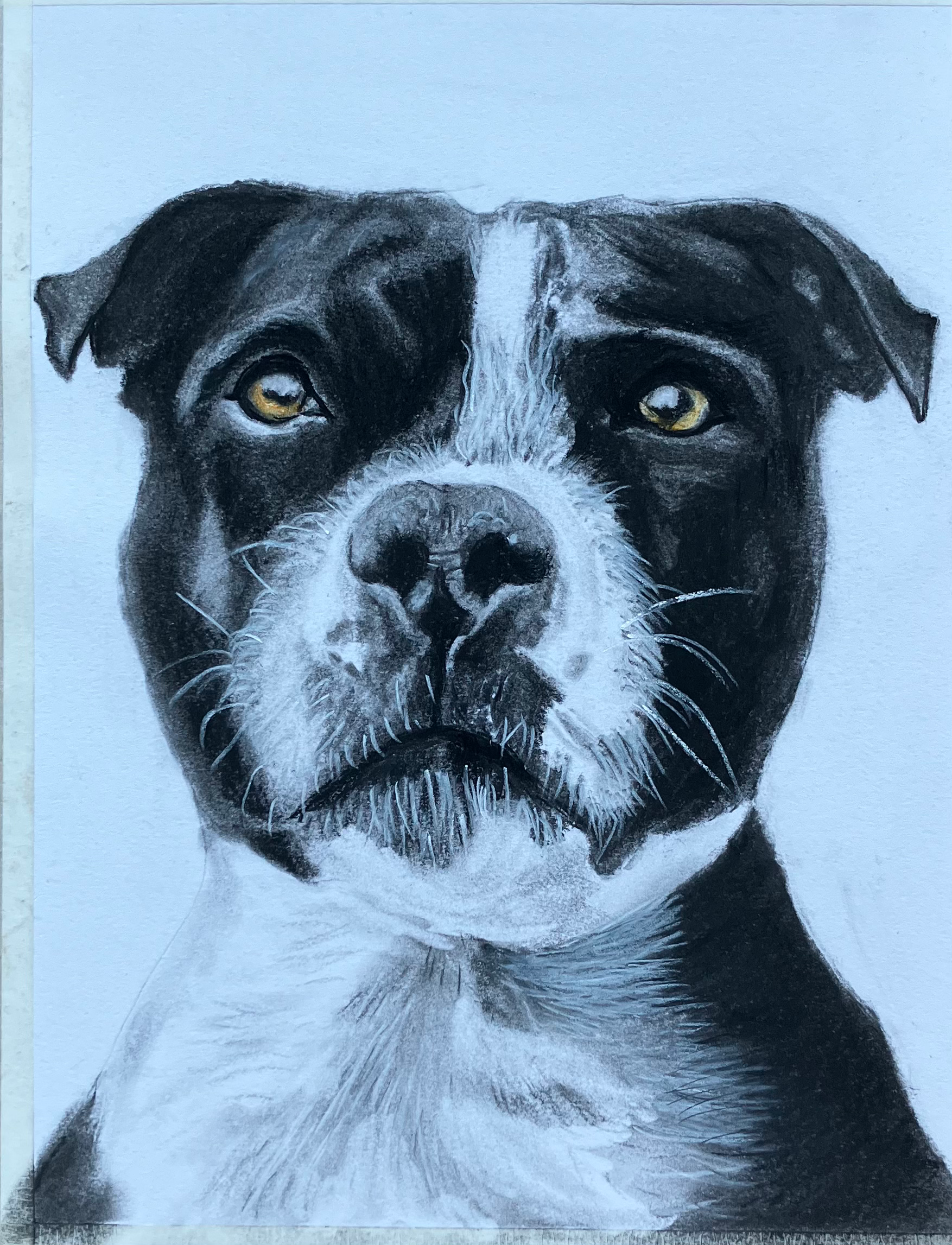
“Can I Come In?” featuring Freddie the black lab.

“Actor”: Light vs. Dark on Black Card

Working light pastels on black card is a technical tightrope:
Challenge: Pastel dust loves to transfer.
Solution: Extensive masking with low-tack tape
Blending; finger blending with the lightest touch for soft transitions.
Tools of choice: Cass Art soft pastels for broad areas; Silicon blending tools for precision.
Pro Tip: When working on dark substrates always lay down a white base layer first (thanks, Colin Bradley!) – especially critical on dark grounds with light pastel pencils
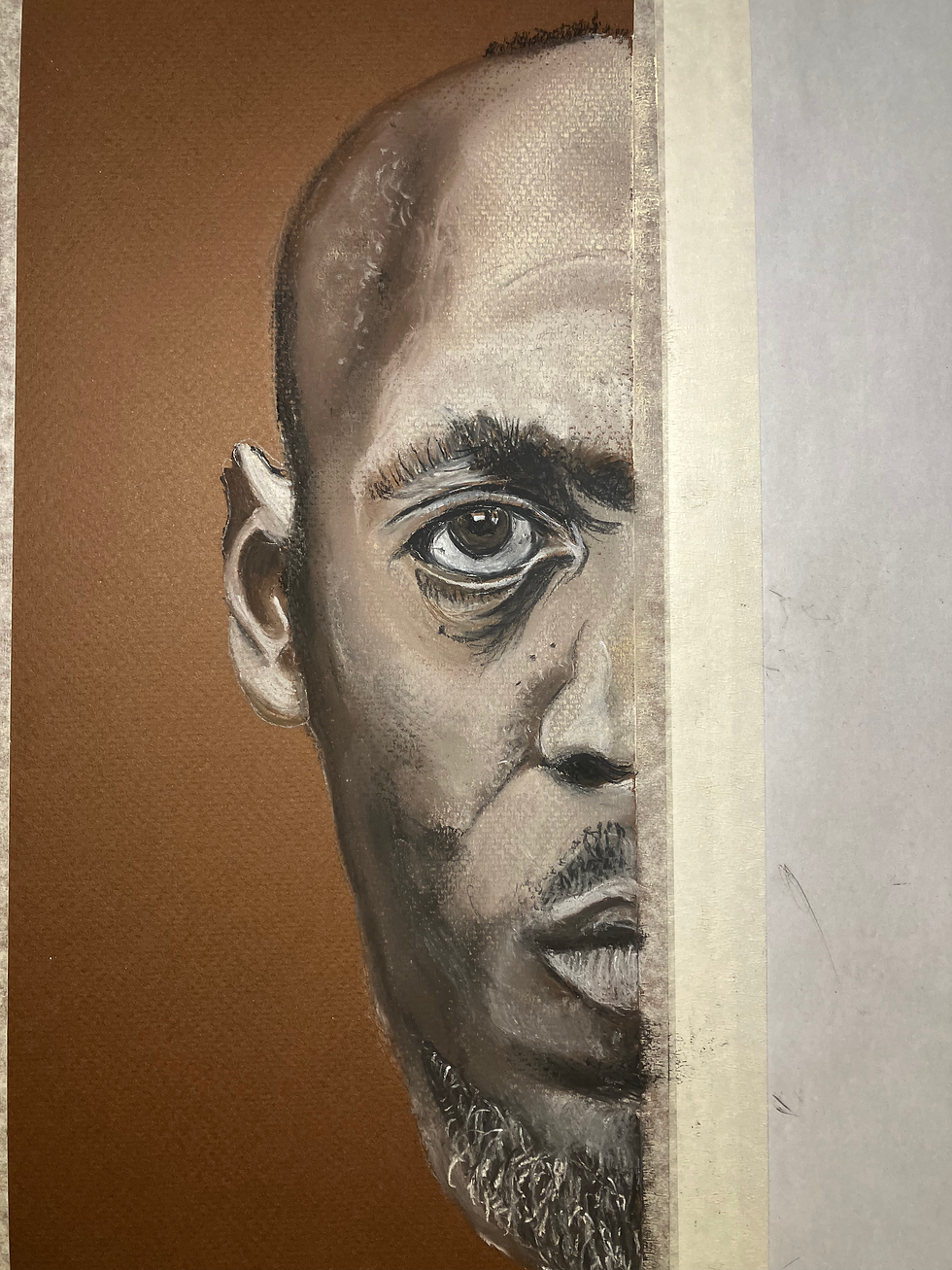
“Athlete”: Lessons from a Tiny Tear
Over-enthusiastic masking left a small surface tear on the delicate brown mat. Lesson learned:
1. Use low-tack tape only on paper substrates.
2. Build layers slowly – blend with fingertips or silicon torchons.
3. Final fixative? Apply gently to avoid shifting.
Why some Eyecon are classified as Development Pieces
“Athlete” like certain other original Eyecon artworks is not for sale – they’re bold experiments in:
• Unfamiliar substrates
• Reverse pastel technique
• Extreme chiaroscuro lighting
But you can still view and buy giclée prints of other Eyecons in the MyEyecon Gallery
The Eyecon Process and Development of my Technique
I learnt a lot of my pastel techniques from Colin Bradley, who in many ways helped to pioneer the Caran D’Ache pencils. Colin always advocated the use of an initial white background first layer before then adding any other colours. I still use this principle which, when working on dark backgrounds, is even more important.
Hope you have found this useful don’t hesitate to contact me if you need any help.


Comments